
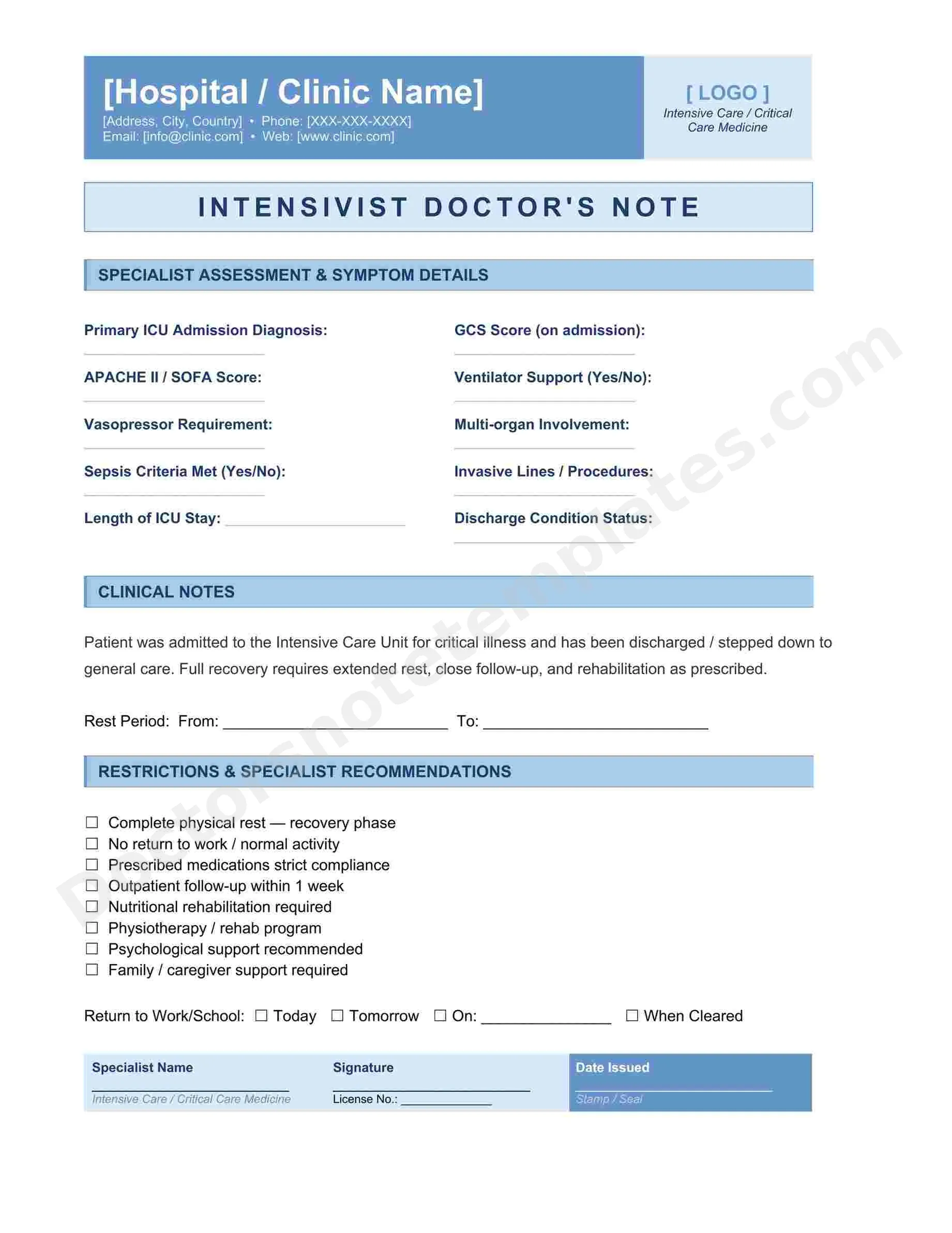
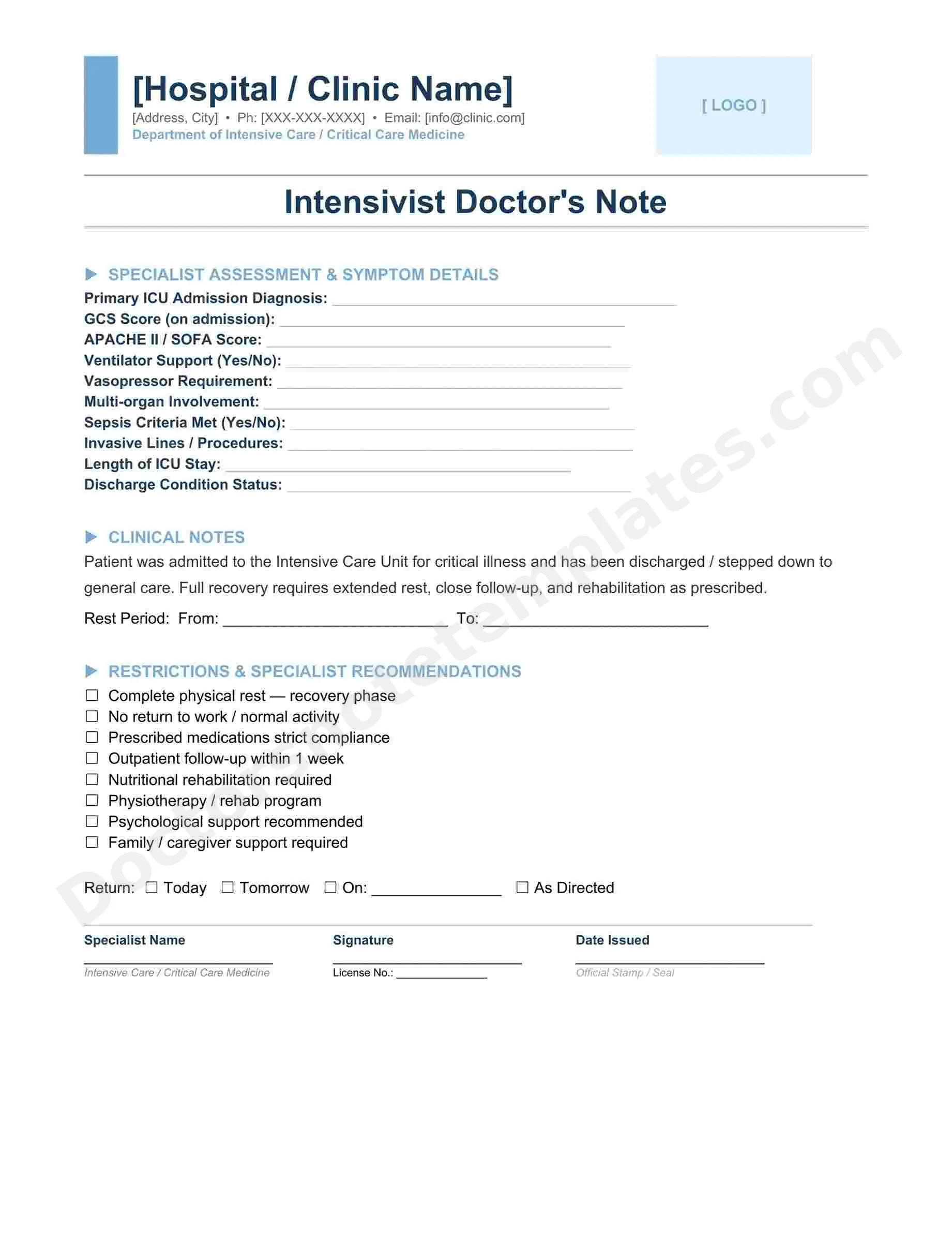
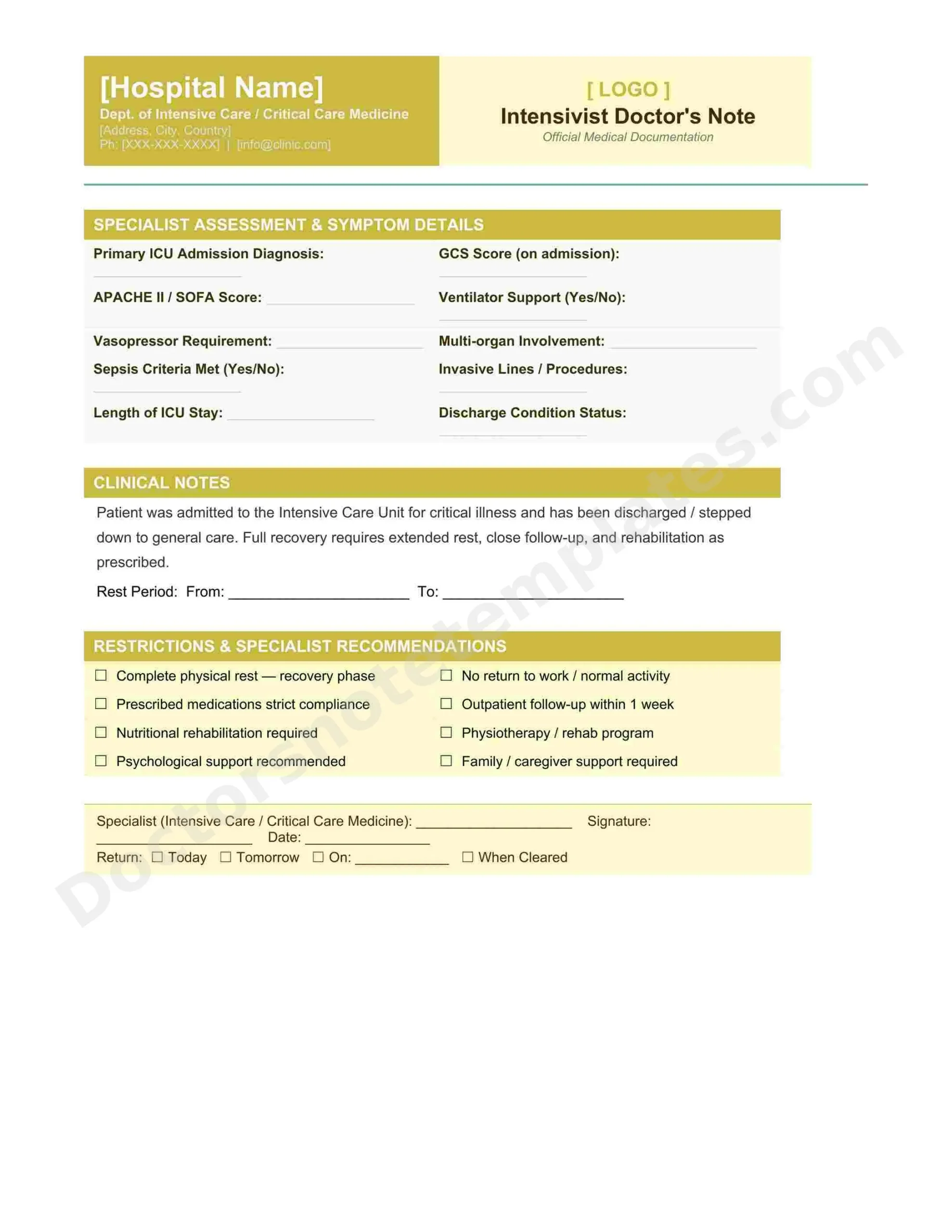



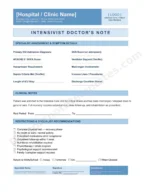
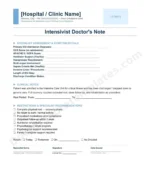
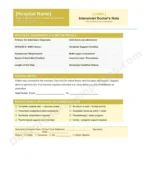




An Intensivist Doctor’s Note is a medical document prepared by an intensivist, a physician who specializes in critical care medicine and treats patients with life-threatening illnesses or injuries in an Intensive Care Unit (ICU). The note documents the patient’s diagnosis, current condition, treatments provided, clinical progress, and recommendations for ongoing care.
These notes play an essential role in ensuring continuity of care between healthcare providers. They may also support administrative needs—such as requests for medical leave or insurance documentation—when appropriate, although acceptance depends on the requirements of employers, insurers, schools, or other organizations.
Whether you or a loved one has recently been admitted to the ICU or is recovering from a critical illness, understanding what an intensivist doctor’s note contains can help you navigate the recovery process with greater confidence.
Intensivist Doctor’s Note
Intensivist Specialisation
Intensive CareCritical Care TreatmentICU ManagementLife SupportEmergency CareSevere Illness TreatmentOrgan SupportCritical MonitoringTrauma CareAcute Care MedicineResuscitationCritical Illness ManagementICU ProceduresEmergency Treatment
Patient Should Avoid
Avoid infectionsavoid stressavoid skipping medicationavoid poor hygieneavoid exertionavoid exposure to illnessavoid ignoring critical symptoms
An Intensivist Doctor’s Note is a clinical document written by a physician specializing in Critical Care Medicine. It summarizes a patient’s ICU diagnosis, treatments, response to therapy, progress during hospitalization, and recommendations for follow-up care after discharge or transfer.
Key Takeaways
- An intensivist is a physician trained in Critical Care Medicine.
- Intensivists primarily care for patients admitted to an Intensive Care Unit (ICU).
- Their medical notes document diagnoses, treatments, medications, and clinical progress.
- These notes support communication between healthcare providers and help guide ongoing treatment.
- Depending on the circumstances, documentation may assist with insurance claims, rehabilitation planning, or requests for medical leave.
- ICU records are confidential medical documents protected under applicable privacy laws.
- Patients can generally request copies of their medical records through the treating hospital or healthcare provider.
What Is an Intensivist?
An intensivist is a physician with advanced training in Critical Care Medicine, focusing on the diagnosis and treatment of patients with severe, complex, or life-threatening medical conditions. These specialists work primarily in hospital Intensive Care Units (ICUs), where patients require continuous monitoring and specialized medical management.
Unlike physicians who focus on a single organ system, intensivists manage multiple body systems simultaneously. They coordinate care with cardiologists, pulmonologists, neurologists, surgeons, nephrologists, infectious disease specialists, nurses, respiratory therapists, pharmacists, and rehabilitation teams to provide comprehensive treatment.
Their responsibilities include:
- Evaluating critically ill patients
- Managing ventilators and advanced life-support equipment
- Monitoring vital organ function
- Treating severe infections and septic shock
- Stabilizing patients after major trauma or surgery
- Coordinating multidisciplinary ICU care
- Planning recovery and follow-up treatment
Because ICU patients often experience rapidly changing conditions, intensivists continuously assess treatment effectiveness and adjust care plans as needed.
What Does an Intensivist Treat?
Intensivists care for patients experiencing serious medical emergencies or complications that require advanced monitoring and treatment.
Common conditions managed by intensivists include:
Acute Respiratory Failure
Patients who cannot breathe adequately on their own may require oxygen therapy, non-invasive ventilation, or mechanical ventilation while the underlying condition is treated.
Sepsis and Septic Shock
Sepsis is a life-threatening response to infection that can lead to organ dysfunction. Early recognition and intensive treatment are essential for improving outcomes.
Heart Attack and Cardiac Complications
Patients recovering from severe heart attacks, cardiac arrest, or unstable heart conditions may require intensive monitoring and specialized cardiac care.
Stroke
Certain stroke patients need ICU care to closely monitor neurological function, blood pressure, and potential complications.
Multiple Organ Failure
When two or more organ systems begin to fail, intensivists coordinate complex treatments to support recovery and maintain organ function.
Severe Pneumonia
Advanced lung infections can significantly impair breathing and may require intensive respiratory support.
Traumatic Injuries
Patients involved in motor vehicle accidents, falls, burns, or other serious injuries often require ICU admission for comprehensive management.
Post-Surgical Complications
After major surgery, some patients require intensive monitoring due to complications such as bleeding, infection, or respiratory difficulties.
Acute Kidney Injury
Patients with severe kidney dysfunction may need dialysis and close monitoring while recovering from critical illness.
Poisoning or Drug Overdose
Certain poisonings and overdoses require continuous observation and advanced supportive care available in the ICU.
Why Is an Intensivist Doctor’s Note Important?
An intensivist doctor’s note serves as a detailed medical record of a patient’s ICU care. It helps healthcare providers understand the patient’s clinical history, current condition, and recommended next steps.
The document is important because it:
- Summarizes the patient’s critical illness and treatment.
- Documents clinical findings and medical decisions.
- Supports communication between healthcare teams.
- Guides follow-up care after ICU discharge.
- Helps rehabilitation specialists understand the patient’s recovery needs.
- May support insurance or administrative documentation when required.
Accurate documentation also reduces the risk of miscommunication when patients transition between different healthcare providers or facilities.
When Might You Need an Intensivist Doctor’s Note?
Patients or their families may require an intensivist doctor’s note in several situations.
After ICU Discharge
Following discharge from the ICU, the note helps explain the patient’s diagnosis, treatment received, and recommendations for recovery.
During Hospital Transfer
If a patient is transferred to another hospital, rehabilitation center, or specialty unit, the intensivist’s documentation helps the receiving team continue care safely.
Follow-Up Medical Care
Primary care physicians and specialists often review ICU documentation to better understand the patient’s hospitalization and recovery needs.
Medical Leave Requests
Patients recovering from a critical illness may need temporary leave from work or school. An intensivist’s documentation may support these requests when appropriate, although acceptance depends on the policies of the employer, insurer, or educational institution.
Insurance Documentation
Health insurers may request medical records related to ICU admission, hospitalization, or critical illness when evaluating certain claims. Requirements vary by insurer and policy.
Rehabilitation Planning
Patients recovering from severe illness or injury may require:
- Physical therapy
- Occupational therapy
- Speech therapy
- Pulmonary rehabilitation
- Cardiac rehabilitation
The intensivist’s note provides valuable information to rehabilitation teams when developing an individualized recovery plan.
Common Reasons Patients Receive an Intensivist Doctor’s Note
While every patient’s situation is unique, intensivist notes are commonly prepared for individuals recovering from:
- Severe pneumonia
- Sepsis or septic shock
- Acute respiratory distress syndrome (ARDS)
- Heart attack
- Cardiac arrest
- Stroke
- Major trauma
- Serious burns
- Multi-organ failure
- Severe COVID-19 or other critical respiratory illnesses
- Complications following major surgery
- Acute kidney injury requiring dialysis
- Drug overdose or poisoning
- Severe allergic reactions (anaphylaxis)
- Life-threatening infections
Can an Intensivist Recommend Time Off Work?
Yes. Depending on the patient’s medical condition and recovery needs, an intensivist may recommend a period of reduced activity, temporary work restrictions, or time away from work. The duration varies based on the severity of the illness, the patient’s progress, and the demands of their job.
It’s important to note that individual employers, insurers, or other organizations determine whether documentation satisfies their specific leave requirements.
Can You Discuss Your Recovery with a Doctor Online?
For many patients, follow-up care after hospitalization can be managed through telehealth or online doctor appointments, depending on the medical issue and local regulations.
An online consultation may be appropriate to:
- Discuss ongoing symptoms after hospital discharge.
- Review medications and treatment plans.
- Address questions about recovery.
- Determine whether additional in-person evaluation is needed.
- Receive guidance on returning to work or daily activities.
If medical documentation is requested during an online consultation, any note or recommendation is issued only when clinically appropriate and based on the physician’s professional evaluation.
Need Follow-Up Care After an ICU Stay?
If you’ve recently been discharged from the hospital and have questions about your recovery, you can book an online appointment with a licensed healthcare provider. A physician can review your symptoms, discuss your treatment plan, and recommend the next steps based on your individual medical needs.
Why Understanding an Intensivist Doctor’s Note Matters
Recovering from a critical illness can be overwhelming. Medical records often contain technical terminology that patients and families may find difficult to understand. Learning what an intensivist doctor’s note includes can help you:
- Better understand your diagnosis and treatment.
- Prepare for follow-up appointments.
- Communicate effectively with healthcare providers.
- Stay informed about medications and recovery recommendations.
- Manage rehabilitation with greater confidence.
- Keep important medical documentation organized for future healthcare needs.
What Information Is Included in an Intensivist Doctor’s Note?
An Intensivist Doctor’s Note contains detailed information about a patient’s condition, treatment, and progress while receiving care in the Intensive Care Unit (ICU). Since ICU patients often have complex medical needs, these notes are usually more detailed than standard medical records.
The exact format may vary between hospitals and healthcare systems, but a typical intensivist note includes the following sections:
1. Patient Information and Medical History
The note begins with essential patient details that help healthcare providers identify and understand the patient’s medical background.
This section may include:
- Patient name
- Date of birth
- Medical record number
- Admission date
- ICU admission date
- Primary diagnosis
- Relevant medical history
- Previous surgeries
- Existing health conditions
- Current medications
- Allergies
Understanding a patient’s medical history helps the intensivist make informed decisions about treatment options and potential risks.
2. Reason for ICU Admission
One of the most important parts of an intensivist doctor’s note is the explanation of why the patient required intensive care.
Common reasons include:
- Difficulty breathing or respiratory failure
- Severe infection or sepsis
- Heart-related emergencies
- Neurological emergencies
- Major injuries
- Complications after surgery
- Organ dysfunction
- Need for continuous monitoring
Example:
“Patient admitted to ICU due to acute respiratory failure requiring oxygen support and close monitoring following severe pneumonia.”
This section provides context for the entire treatment plan.
3. Current Clinical Condition
The intensivist documents the patient’s current health status through physical examination and ongoing monitoring.
This may include:
Vital Signs
- Blood pressure
- Heart rate
- Body temperature
- Respiratory rate
- Oxygen saturation
Physical Assessment
- Level of consciousness
- Neurological status
- Breathing pattern
- Heart function
- Lung examination
- Abdominal assessment
- Skin condition
- Signs of infection
Because ICU patients can experience rapid changes, these assessments are frequently updated.
4. Laboratory Test Results
Critical care treatment often depends on frequent laboratory monitoring. An intensivist may review and document important test results, including:
Blood Tests
Blood tests help evaluate:
- Infection levels
- Blood cell counts
- Electrolyte balance
- Organ function
- Blood clotting ability
Common tests include:
- Complete blood count (CBC)
- Comprehensive metabolic panel (CMP)
- Blood cultures
- Coagulation tests
- Inflammatory markers
Kidney Function Tests
Kidney health is closely monitored in critically ill patients.
Tests may include:
- Creatinine levels
- Blood urea nitrogen (BUN)
- Urine output monitoring
Blood Gas Analysis
For patients with breathing problems, arterial blood gas (ABG) testing helps evaluate:
- Oxygen levels
- Carbon dioxide levels
- Blood acidity (pH)
These results help guide decisions regarding oxygen therapy and ventilator settings.
5. Imaging and Diagnostic Reports
An intensivist’s note may summarize important imaging results that influence treatment decisions.
Common diagnostic tests include:
Chest X-Ray
Often used to evaluate:
- Pneumonia
- Lung infections
- Fluid accumulation
- Ventilator-related changes
CT Scan
May help diagnose:
- Brain injuries
- Blood clots
- Internal injuries
- Complex infections
MRI
Frequently used for detailed evaluation of:
- Brain conditions
- Spinal injuries
- Neurological problems
Ultrasound and Echocardiogram
Used to evaluate:
- Heart function
- Fluid status
- Blood flow
- Organ conditions
6. Medications and Treatments Provided
The intensivist documents medications and treatments administered during ICU care.
These may include:
Antibiotics
Used to treat serious bacterial infections, including sepsis and severe pneumonia.
Oxygen Therapy
Depending on the patient’s condition, support may include:
- Nasal oxygen
- High-flow oxygen
- Non-invasive ventilation
- Mechanical ventilation
Mechanical Ventilation
For patients unable to breathe adequately, a ventilator may provide breathing support while the lungs recover.
The note may include:
- Ventilator settings
- Oxygen requirements
- Breathing progress
Intravenous Medications
Many ICU treatments are delivered through IV therapy, including:
- Antibiotics
- Fluids
- Blood pressure medications
- Pain medications
- Sedatives
Dialysis Support
Patients experiencing severe kidney problems may require dialysis. The intensivist documents:
- Reason for dialysis
- Treatment schedule
- Patient response
7. Daily Progress Assessment
One of the most important sections of an intensivist doctor’s note is the daily progress update.
The physician reviews:
- Whether the patient’s condition is improving
- Whether treatments are working
- Any new complications
- Changes in medication
- Changes in monitoring requirements
Example:
“Patient showing gradual improvement in respiratory function. Oxygen requirements reduced. Continue monitoring and respiratory support as needed.”
8. Treatment Plan and Future Recommendations
The intensivist outlines the next steps in patient care.
The plan may include:
- Continuing current medications
- Reducing respiratory support
- Monitoring laboratory values
- Managing pain and comfort
- Preventing complications
- Beginning rehabilitation when appropriate
- Preparing for transfer from ICU
How Do Intensivists Evaluate Critically Ill Patients?
Intensivists use a comprehensive approach to evaluate ICU patients. Unlike routine medical visits, ICU assessments involve continuous monitoring because patients’ conditions can change quickly.
The evaluation generally includes:
1. Airway Assessment
The intensivist checks whether the patient’s airway is open and protected.
Important considerations include:
- Ability to breathe independently
- Need for airway support
- Risk of airway obstruction
2. Breathing Assessment
Respiratory function is closely monitored.
Doctors evaluate:
- Oxygen levels
- Breathing rate
- Lung sounds
- Need for oxygen support
- Ventilator requirements
3. Circulation Assessment
The intensivist evaluates how effectively blood circulates throughout the body.
This includes monitoring:
- Blood pressure
- Heart rate
- Heart rhythm
- Blood flow to organs
4. Neurological Assessment
Doctors monitor brain and nervous system function.
Assessment may include:
- Alertness
- Ability to respond
- Movement
- Reflexes
- Mental status
5. Kidney and Organ Function
Critical illnesses can affect multiple organs. Intensivists monitor:
- Kidney function
- Liver function
- Fluid balance
- Electrolytes
- Urine output
6. Infection Monitoring
For patients with infections, intensivists monitor:
- Temperature changes
- White blood cell counts
- Culture results
- Response to antibiotics
- Signs of worsening infection
Intensivist Doctor’s Note vs. Hospital Discharge Summary
Although both documents are part of medical records, they serve different purposes.
| Intensivist Doctor’s Note | Hospital Discharge Summary |
|---|---|
| Usually created during ICU care | Created when patient leaves the hospital |
| Written by a critical care specialist | Usually prepared by the treating hospital team |
| Focuses on critical illness management | Summarizes the entire hospitalization |
| Includes ICU monitoring and treatment details | Includes final diagnosis and discharge instructions |
| Used mainly by healthcare teams | Often provided to patients after discharge |
Both documents are valuable and may be used together to understand a patient’s medical journey.
Intensivist vs. Hospitalist vs. Primary Care Physician
Patients often confuse these roles because all are doctors involved in patient care.
| Doctor Type | Main Role |
|---|---|
| Intensivist | Manages critically ill patients requiring ICU care |
| Hospitalist | Provides general medical care for hospitalized patients |
| Primary Care Physician | Provides ongoing healthcare outside the hospital |
Intensivist
An intensivist specializes in managing life-threatening conditions requiring intensive monitoring and advanced treatments.
Hospitalist
A hospitalist manages patients admitted to the hospital but usually does not specialize exclusively in ICU-level care.
Primary Care Physician
A primary care doctor manages general health needs, preventive care, chronic conditions, and long-term healthcare planning.
These physicians often work together to provide complete patient care.
How ICU Documentation Helps After Hospital Discharge
An intensivist doctor’s note remains valuable even after a patient leaves the ICU.
It helps:
- New doctors understand previous treatment.
- Specialists make informed decisions.
- Patients track their recovery progress.
- Rehabilitation teams design appropriate care plans.
- Families understand the seriousness of the illness.
For patients recovering from critical illness, proper medical documentation can make follow-up care more organized and effective.
How to Obtain an Intensivist Doctor’s Note
An Intensivist Doctor’s Note is a medical document created by a physician who has evaluated and treated a patient in an intensive care setting. Since it contains sensitive medical information, patients generally need to request it through appropriate healthcare channels.
The process of obtaining an intensivist doctor’s note may vary depending on the hospital, healthcare provider, and local regulations.
Common ways to request ICU-related documentation include:
1. Request Through the Treating Hospital
The most common method is contacting the hospital where the patient received ICU care.
Patients can usually request medical records through:
- Hospital medical records department
- Health information management department
- Patient portal
- Hospital administration office
The hospital may require:
- Patient identification
- Authorization forms
- Proof of relationship if requesting records for another person
- Processing time depending on the request
2. Contact the Treating Intensivist or ICU Team
Patients may also contact the physician or medical team involved in their ICU care.
The intensivist can help explain:
- The diagnosis
- Treatment received
- Recovery recommendations
- Follow-up requirements
However, availability depends on the hospital system and physician practice.
3. Request Through a Primary Care Physician
After hospital discharge, many patients follow up with their primary care physician.
A primary care doctor can:
- Review ICU records
- Explain medical information
- Coordinate follow-up care
- Recommend additional evaluations when needed
Can You Get an Intensivist Doctor’s Note Online?
Many patients wonder whether they can obtain an Intensivist Doctor’s Note through an online appointment.
The answer depends on the purpose of the documentation and the patient’s medical situation.
An online doctor consultation may help patients:
- Discuss symptoms after ICU discharge
- Review recovery concerns
- Understand treatment recommendations
- Ask questions about medications
- Receive guidance about follow-up care
However, an intensivist doctor’s note specifically related to ICU treatment is typically based on the medical evaluation and records from the hospital where the patient received critical care.
A licensed healthcare provider may provide medical documentation or recommendations through telehealth when clinically appropriate and permitted by applicable regulations.
How Online Doctor Appointments Can Help After ICU Recovery
Recovering after intensive care can involve many questions and concerns. Telehealth appointments can provide convenient access to healthcare providers for appropriate follow-up needs.
An online consultation may help with:
Reviewing Recovery Progress
Patients can discuss:
- Ongoing symptoms
- Energy levels
- Breathing concerns
- Medication effects
- Recovery challenges
Understanding Discharge Instructions
After leaving the ICU, patients may have questions about:
- Medication schedules
- Activity restrictions
- Follow-up appointments
- Warning signs to monitor
A healthcare provider can help clarify these instructions.
Discussing Return to Normal Activities
A physician can provide guidance about:
- Returning to work
- Resuming exercise
- Daily activities
- Lifestyle adjustments
Recommendations depend on the patient’s condition and recovery progress.
Managing Follow-Up Care
Online appointments may support continued care by helping patients:
- Connect with healthcare providers
- Discuss new symptoms
- Determine if additional evaluation is needed
- Coordinate future medical care
Medical Leave After ICU Treatment
Recovery after critical illness often requires time away from normal responsibilities. Depending on the condition, patients may need temporary medical leave from work or school.
An intensivist or another treating physician may recommend time away from activities when medically appropriate.
The length of leave depends on factors such as:
- Type and severity of illness
- Length of ICU stay
- Treatment received
- Physical strength
- Recovery progress
- Nature of the patient’s work or daily activities
Common Reasons for Medical Leave After ICU Care
Patients may require recovery time after conditions such as:
Severe Infections
Examples include:
- Sepsis
- Severe pneumonia
- Serious bacterial infections
Recovery may involve fatigue, weakness, and ongoing medical monitoring.
Respiratory Conditions
Patients recovering from:
- Respiratory failure
- Ventilator support
- Severe lung infections
may need additional time before returning to physically demanding activities.
Heart-Related Conditions
Recovery after:
- Heart attack
- Cardiac arrest
- Major cardiac procedures
may require gradual return to normal activities.
Major Surgery or Trauma
Patients recovering from:
- Serious injuries
- Complex surgeries
- Multiple procedures
may need rehabilitation and restricted activity.
Can an Intensivist Doctor’s Note Support Work Leave?
An intensivist doctor’s note may provide medical information about a patient’s condition and recovery needs.
It may include:
- Diagnosis
- Treatment history
- Current limitations
- Recommended recovery period
- Follow-up requirements
However, employers and organizations have their own policies regarding medical leave documentation. Patients should check specific requirements with their workplace or institution.
Return-to-Work Recommendations After ICU Care
Returning to work after critical illness should usually be based on medical recovery rather than a fixed timeline.
Factors doctors consider include:
Physical Recovery
Assessment may include:
- Strength
- Mobility
- Breathing ability
- Stamina
- Pain levels
Cognitive Recovery
Some patients experience temporary difficulties after ICU treatment, including:
- Difficulty concentrating
- Memory problems
- Mental fatigue
These concerns may influence return-to-work planning.
Job Requirements
Recovery recommendations may differ depending on the type of work.
For example:
- Office-based work may allow an earlier return.
- Physically demanding jobs may require additional recovery time.
- Safety-sensitive roles may require further evaluation.
Insurance and Disability Documentation
Medical documentation from an intensivist or treating physician may be relevant for certain insurance or disability-related processes.
Documentation may help explain:
- The severity of illness
- Hospital admission details
- Treatment received
- Functional limitations
- Recovery expectations
Insurance requirements vary, and additional forms or assessments may be needed depending on the policy.
ICU Recovery Timeline: How Long Does Recovery Take?
Recovery after ICU treatment is different for every patient. Some people recover within weeks, while others may experience symptoms for months.
Recovery depends on:
- Age
- Overall health
- Type of critical illness
- Duration of ICU stay
- Need for ventilator support
- Presence of complications
- Rehabilitation needs
General ICU Recovery Timeline
| Recovery Stage | What Patients May Experience |
|---|---|
| First Few Days After Discharge | Fatigue, weakness, medication adjustments, follow-up planning |
| First Few Weeks | Gradual improvement in strength and daily activities |
| One to Three Months | Continued physical recovery and return to routine activities |
| Several Months or Longer | Some patients may require extended rehabilitation |
These timelines are general estimates. Individual recovery can vary significantly.
Post-Intensive Care Syndrome (PICS)
Some ICU survivors experience ongoing physical, mental, or emotional challenges after leaving intensive care. This is sometimes referred to as Post-Intensive Care Syndrome (PICS).
Possible symptoms include:
Physical Challenges
- Muscle weakness
- Fatigue
- Sleep problems
- Reduced endurance
Cognitive Challenges
- Memory difficulties
- Trouble concentrating
- Confusion
Emotional Challenges
- Anxiety
- Depression symptoms
- Stress after a serious illness
Patients experiencing ongoing concerns should discuss them with a healthcare professional.
Sample Intensivist Doctor’s Note
Below is an example of the type of information that may appear in an intensivist medical note.
Patient Name: Michael Anderson
Date of Evaluation: August 15, 2026
Medical Summary:
The patient was admitted to the Intensive Care Unit due to severe respiratory illness requiring advanced monitoring and respiratory support. Treatment included medication management, oxygen therapy, and continuous evaluation of respiratory function.
Current Condition:
- Vital signs stable
- Respiratory status improving
- Continuing recovery plan
- Follow-up care recommended
Treatment Recommendations:
- Continue prescribed medications
- Attend scheduled follow-up appointments
- Gradually increase physical activity as tolerated
- Continue rehabilitation exercises if recommended
Physician:
Licensed Healthcare Provider
Critical Care Medicine / Medical Care Team
Note: This sample is for educational purposes only and does not represent an actual medical document.
Common Mistakes Patients Make When Requesting Medical Documentation
Patients often face delays because of avoidable mistakes.
Common issues include:
1. Not Requesting Records Early
Medical record requests may take time. Patients should begin the process before documentation is urgently needed.
2. Not Checking Requirements
Different organizations may require different information, such as:
- Specific forms
- Physician signatures
- Dates of treatment
- Diagnosis details
3. Sharing Incomplete Medical Information
Providing accurate information about previous treatment helps doctors understand the situation better.
4. Expecting Automatic Approval
A medical note does not automatically guarantee approval for leave, insurance benefits, or other requests. Organizations review documentation according to their own policies.
Need Follow-Up Care After an ICU Stay?
Recovery after intensive care can require ongoing medical guidance. If you have questions about symptoms, medications, recovery progress, or follow-up care, an online doctor appointment may provide convenient access to a licensed healthcare provider.
A physician can review your concerns, discuss your health history, and recommend appropriate next steps based on your individual situation.
Benefits of an Intensivist Doctor’s Note
An Intensivist Doctor’s Note provides a detailed record of a patient’s critical care journey. For patients recovering from serious illnesses, this documentation can help healthcare providers, patients, and caregivers understand the medical situation and plan the next steps.
While the primary purpose of an intensivist note is medical communication, it may also support other healthcare-related and administrative needs when appropriate.
1. Helps Maintain Continuity of Care
Patients who recover from ICU treatment often continue receiving care from multiple healthcare professionals.
An intensivist doctor’s note helps doctors understand:
- Why the patient required ICU admission
- What treatments were provided
- How the patient responded to treatment
- What complications occurred
- What follow-up care may be required
This information allows future healthcare providers to make better-informed decisions.
2. Provides a Clear Medical History
Critical illnesses can involve complex treatments and multiple interventions. Remembering every detail of an ICU stay can be difficult for patients and families.
An intensivist note provides a structured summary of:
- Diagnosis
- Medical procedures
- Medications
- Tests performed
- Recovery progress
- Follow-up recommendations
This can be especially helpful during future medical appointments.
3. Supports Recovery Planning
Recovery after intensive care may involve several stages. The intensivist’s documentation can help guide:
- Rehabilitation programs
- Physical therapy plans
- Medication management
- Specialist follow-ups
- Lifestyle adjustments
For example, a patient recovering from respiratory failure may need breathing exercises and pulmonary rehabilitation.
4. Helps Explain Medical Conditions
Medical terminology used during ICU treatment can be difficult to understand. A detailed note helps patients and caregivers better understand:
- The seriousness of the illness
- The treatment received
- The expected recovery process
- Important follow-up instructions
Understanding medical information can help patients actively participate in their healthcare decisions.
5. May Support Administrative Documentation
In some situations, medical documentation may be requested for:
- Workplace medical leave
- School or university absence
- Insurance claims
- Disability-related processes
- Rehabilitation services
The specific requirements vary depending on the organization requesting the documentation.
Limitations of an Intensivist Doctor’s Note
Although an intensivist doctor’s note is an important medical document, it has certain limitations.
Understanding these limitations helps patients have realistic expectations.
1. It Does Not Guarantee Approval for Leave or Benefits
A doctor’s note provides medical information, but final decisions regarding:
- Workplace leave
- Insurance claims
- Disability benefits
- Academic accommodations
are made by the relevant organization according to their policies.
2. It Cannot Replace Medical Evaluation
A medical note must be based on appropriate clinical assessment.
Healthcare providers consider:
- Symptoms
- Medical history
- Examination findings
- Available medical records
- Current health condition
Documentation should accurately reflect the patient’s medical situation.
3. ICU Documentation May Not Include Every Detail
An intensivist note focuses on critical care management. Other medical records may contain additional information, such as:
- Surgical reports
- Nursing notes
- Specialist consultations
- Laboratory reports
- Imaging results
Patients may need multiple documents to obtain a complete picture of their hospitalization.
4. Medical Notes Are Patient-Specific
A note prepared for one patient cannot be used to represent another person’s medical condition.
Each medical document must accurately describe the individual patient’s healthcare situation.
Privacy and Confidentiality of Intensivist Doctor’s Notes
Medical records, including intensivist doctor’s notes, contain private health information and are protected by healthcare privacy regulations.
Healthcare providers have responsibilities to protect patient information.
Who Can Access an Intensivist Doctor’s Note?
Access is generally limited to authorized individuals, such as:
- The patient
- Authorized family members or representatives
- Treating healthcare providers
- Healthcare organizations involved in care
- Insurance providers when authorized or permitted
Rules regarding access vary depending on location and applicable privacy laws.
How Is Medical Information Protected?
Healthcare organizations use security measures such as:
- Secure electronic medical record systems
- Identity verification
- Access controls
- Confidentiality policies
Patients should also take care when sharing medical documents online.
Can Employers See ICU Medical Records?
Generally, employers do not automatically have access to a patient’s complete medical records.
If medical documentation is required for workplace purposes:
- The patient usually provides the required information.
- Only relevant medical details may be shared.
- Employers typically do not receive unrestricted access to private medical records.
Patients should understand what information they are authorizing before sharing documentation.
Can Employers Verify an Intensivist Doctor’s Note?
Some employers or organizations may verify medical documentation according to their policies.
Verification processes may involve:
- Confirming the authenticity of documentation
- Contacting the healthcare provider with patient authorization
- Reviewing required forms
Healthcare providers generally cannot disclose private medical information without appropriate permission unless permitted or required by law.
Tips for Recovery After ICU Discharge
Leaving the ICU is an important milestone, but recovery may continue for weeks or months. Patients should follow their healthcare provider’s recommendations and monitor their progress.
1. Follow Your Medication Plan
After ICU treatment, patients may take multiple medications.
Important steps include:
- Taking medicines exactly as prescribed
- Understanding medication schedules
- Asking questions about side effects
- Avoiding medication changes without medical advice
2. Attend Follow-Up Appointments
Follow-up care helps monitor recovery and identify potential problems early.
Appointments may include:
- Primary care visits
- Specialist consultations
- Rehabilitation assessments
- Medication reviews
3. Gradually Increase Physical Activity
Many ICU survivors experience weakness after hospitalization.
Recovery may include:
- Short walks
- Gentle exercises
- Physical therapy
- Gradual improvement of stamina
Patients should avoid pushing themselves beyond medical recommendations.
4. Maintain Proper Nutrition and Hydration
Good nutrition supports healing.
Patients may benefit from:
- Balanced meals
- Adequate protein intake
- Sufficient fluids
- Following dietary recommendations from healthcare providers
5. Monitor Mental and Emotional Health
Critical illness can affect emotional well-being.
Some patients experience:
- Stress
- Anxiety
- Sleep difficulties
- Emotional changes
Discussing these concerns with a healthcare professional can help identify appropriate support.
6. Keep Medical Records Organized
Patients should maintain copies of important healthcare documents, including:
- ICU discharge summaries
- Medication lists
- Test reports
- Specialist recommendations
- Follow-up instructions
Organized records make future healthcare visits easier.
When Should You Seek Medical Attention After ICU Discharge?
Patients recovering from critical illness should contact a healthcare provider if they experience concerning symptoms.
Seek medical advice for symptoms such as:
Breathing Problems
Including:
- New or worsening shortness of breath
- Chest discomfort
- Difficulty breathing during normal activities
Signs of Infection
Including:
- Persistent fever
- Increasing weakness
- New confusion
- Worsening pain or swelling
Heart-Related Symptoms
Including:
- Chest pain
- Rapid heartbeat
- Severe dizziness
- Fainting
Changes in Mental Status
Including:
- New confusion
- Severe memory problems
- Difficulty staying awake
Common Myths About Intensivist Doctor’s Notes
Myth 1: An Intensivist Note Is the Same as a Regular Doctor’s Note
Fact:
An intensivist note is specifically related to critical care treatment and is prepared by a physician specializing in ICU medicine.
Myth 2: A Doctor’s Note Automatically Approves Medical Leave
Fact:
A doctor’s note provides medical information, but employers, insurers, or institutions make their own decisions based on their requirements.
Myth 3: Only ICU Patients Need Medical Documentation
Fact:
Many types of healthcare situations may require medical documentation. The appropriate document depends on the patient’s medical condition and purpose.
Myth 4: ICU Recovery Ends Immediately After Discharge
Fact:
Many patients continue recovering after leaving the ICU. Physical, emotional, and cognitive recovery may take additional time.
Myth 5: Online Doctors Cannot Help After Hospitalization
Fact:
Online consultations can be useful for appropriate follow-up discussions, medication questions, symptom reviews, and recovery guidance when suitable.
How Online Doctor Appointments Support Post-ICU Care
Healthcare technology has made it easier for patients to access medical guidance after hospitalization.
Online doctor appointments may help patients:
- Discuss recovery concerns from home
- Review symptoms
- Ask questions about medications
- Understand follow-up recommendations
- Determine whether additional care is needed
Telehealth does not replace emergency care or specialist ICU treatment, but it can be a convenient option for appropriate follow-up discussions.
Need Medical Guidance After a Critical Illness?
Recovering after ICU treatment can involve many questions about symptoms, medications, and returning to daily activities.
Through an online doctor appointment, patients can connect with licensed healthcare providers who can review their concerns and provide medical guidance based on their individual situation.
Book an online appointment with a licensed healthcare provider to discuss your recovery questions, ongoing symptoms, or follow-up care needs.
FAQs
Q. What is an Intensivist Doctor’s Note?
A: An Intensivist Doctor’s Note is a medical document prepared by a physician specializing in critical care medicine. It summarizes a patient’s ICU condition, diagnosis, treatments provided, response to care, and recommendations for ongoing recovery.
It is primarily used for communication between healthcare providers and may also support medical documentation needs when appropriate.
Q. What does an intensivist do?
A: An intensivist is a doctor who specializes in caring for critically ill patients, usually in an Intensive Care Unit (ICU).
They manage patients with serious conditions such as:
- Respiratory failure
- Severe infections
- Sepsis
- Heart emergencies
- Stroke
- Major trauma
- Organ failure
They coordinate treatment with other specialists to provide comprehensive critical care.
Q. Is an intensivist the same as an ICU doctor?
A: Yes, in many healthcare settings, an intensivist is commonly referred to as an ICU doctor because they specialize in managing patients admitted to intensive care units.
However, not every doctor working in an ICU may have the same level of specialized critical care training.
Q. What information is included in an Intensivist Doctor’s Note?
A: An intensivist note may include:
- Patient information
- ICU admission reason
- Medical history
- Diagnosis
- Vital signs
- Laboratory results
- Imaging findings
- Medications
- Treatments provided
- Clinical progress
- Recovery recommendations
- Follow-up instructions
The exact format depends on the healthcare facility.
Q. Why is an Intensivist Doctor’s Note important?
A: The note helps healthcare providers understand:
- The severity of the patient’s illness
- Treatments received
- Current health status
- Future care requirements
It supports continuity of care when patients move from ICU care to regular hospital units, rehabilitation centers, or outpatient follow-up.
Q. How can I get a copy of my Intensivist Doctor’s Note?
A: Patients can usually request their medical records through:
- The hospital medical records department
- Health information management office
- Patient portal
- Treating healthcare provider
The hospital may require identity verification before releasing records.
Q. Can I get an Intensivist Doctor’s Note online?
A: An online doctor appointment may help patients discuss their health concerns, recovery progress, and follow-up needs.
However, an ICU-related intensivist note is generally based on the patient’s actual ICU treatment and medical records from the healthcare facility where care was provided.
Any medical documentation provided through an online consultation depends on the physician’s evaluation, professional judgment, and applicable regulations.
Q. Can an online doctor provide a medical note after ICU discharge?
A: Depending on the patient’s situation, a licensed healthcare provider may provide appropriate medical documentation after evaluating the patient’s condition.
The doctor may review:
- Current symptoms
- Medical history
- Available records
- Recovery progress
Documentation decisions are based on clinical assessment.
Q. Can an Intensivist Doctor’s Note be used for work leave?
A: An intensivist doctor’s note may provide information about a patient’s medical condition and recovery needs.
It may support requests related to:
- Medical leave
- Recovery time
- Temporary work restrictions
However, employers have their own requirements and policies regarding medical leave approval.
Q. Can an intensivist recommend a return-to-work date?
A: An intensivist or treating physician may provide recommendations regarding activity restrictions or recovery timelines.
The appropriate return-to-work timing depends on:
- Medical condition
- Recovery progress
- Type of work
- Physical demands of the job
A gradual return may be recommended for some patients.
Q. How long does recovery take after ICU treatment?
A: ICU recovery varies significantly between patients.
Recovery depends on:
- Type of illness
- Age
- Overall health
- Length of ICU stay
- Treatment received
- Rehabilitation needs
Some patients recover within weeks, while others may need months of continued care.
Q. What is Post-Intensive Care Syndrome (PICS)?
A: Post-Intensive Care Syndrome refers to health challenges some patients experience after critical illness.
Possible symptoms include:
Physical Effects
- Muscle weakness
- Fatigue
- Reduced stamina
- Sleep difficulties
Cognitive Effects
- Memory problems
- Difficulty concentrating
- Mental fatigue
Emotional Effects
- Anxiety
- Stress
- Mood changes
Patients experiencing these symptoms should discuss them with a healthcare provider.
Q. Is an Intensivist Doctor’s Note confidential?
A: Yes. Medical records, including intensivist notes, contain private health information.
Access is generally limited to:
- The patient
- Authorized representatives
- Healthcare providers involved in care
- Authorized organizations when permitted
Privacy protections vary depending on location and applicable healthcare regulations.
Q. Can my employer access my ICU medical records?
A: Generally, employers do not have automatic access to complete medical records.
If documentation is required for work-related purposes:
- The patient usually provides the required documents.
- Only necessary information should be shared.
- Medical privacy protections continue to apply.
Q. Can insurance companies request ICU documentation?
A: Insurance providers may request medical documentation for certain claims or reviews.
Required information may include:
- Hospital records
- Diagnosis details
- Treatment information
- Physician documentation
Requirements depend on the insurance policy and claim type.
Q. What is the difference between an intensivist note and a discharge summary?
A: An Intensivist Doctor’s Note focuses mainly on ICU care, critical illness management, and daily progress.
A Hospital Discharge Summary provides an overall summary of the entire hospitalization, including final diagnosis, treatment, medications, and discharge instructions.
Both documents may be important parts of a patient’s medical record.
Q. Can a family member request an intensivist doctor’s note?
A: A family member may request medical records in certain situations if they are legally authorized to do so.
Hospitals typically require:
- Patient permission
- Legal authorization
- Proof of relationship or representative status
Rules vary based on location and healthcare regulations.
Q. What should I do after being discharged from ICU?
A: After ICU discharge, patients should:
- Follow medication instructions
- Attend follow-up appointments
- Monitor symptoms
- Maintain recommended activity levels
- Follow rehabilitation plans
- Communicate concerns with healthcare providers
Recovery should be gradual and guided by medical advice.
Q. Can telehealth help after ICU discharge?
A: Yes, telehealth can support appropriate follow-up care.
Online appointments may help patients:
- Discuss recovery concerns
- Review symptoms
- Ask medication questions
- Understand medical instructions
- Determine whether additional evaluation is needed
However, emergencies require immediate in-person medical attention.
Q. What symptoms require urgent medical attention after ICU discharge?
A: Patients should seek immediate medical care for symptoms such as:
- Severe difficulty breathing
- Chest pain
- Sudden confusion
- Loss of consciousness
- Severe weakness
- Signs of serious infection
- Sudden worsening of symptoms
Q. Can an intensivist write a disability-related medical note?
A: An intensivist or treating physician may provide medical information related to a patient’s condition and functional limitations when clinically appropriate.
Disability-related decisions are usually made according to specific legal and organizational requirements.
Q. How long are ICU medical records kept?
A: Medical record retention periods vary depending on:
- Country
- State or region
- Healthcare facility policies
- Legal requirements
Patients can contact their healthcare provider to understand record availability.
Q. Can I request my ICU records digitally?
A: Many healthcare systems provide digital access through:
- Patient portals
- Electronic health record systems
- Secure medical record request platforms
Availability depends on the healthcare provider.
Q. Does every ICU patient receive an intensivist note?
A: Most ICU patients have medical documentation created by their healthcare team. The exact type and format of documentation depend on the hospital system, physicians involved, and local medical practices.
Q. Is an Intensivist Doctor’s Note the same as a sick note?
A: No.
A sick note generally focuses on a person’s inability to work or attend school due to illness.
An intensivist doctor’s note provides detailed information about critical care treatment and medical status.
Depending on the situation, additional documentation may be needed for workplace or administrative purposes.
Conclusion
An Intensivist Doctor’s Note is an important medical document that records the care provided to patients during critical illness. It explains the patient’s diagnosis, ICU treatment, progress, and recommendations for continued recovery.
For patients and families, understanding these notes can make it easier to:
- Follow recovery plans
- Communicate with healthcare providers
- Organize medical records
- Prepare documentation when required
Critical illness recovery can be a long process, and ongoing medical guidance plays an important role in helping patients regain their health.
If you need medical guidance after hospitalization, you can schedule an online doctor appointment to discuss your symptoms, recovery concerns, and follow-up care needs with a licensed healthcare provider.
Medical Disclaimer
This article is intended for educational purposes only and does not replace professional medical advice, diagnosis, or treatment.
An Intensivist Doctor’s Note or any medical documentation should only be provided by an appropriately qualified healthcare professional after evaluating the patient’s individual medical situation.
If you experience emergency symptoms such as severe breathing difficulty, chest pain, sudden confusion, or loss of consciousness, seek immediate emergency medical care.



Reviews
There are no reviews yet.