




An upset stomach can develop suddenly and make it difficult to carry out everyday responsibilities. Symptoms such as nausea, vomiting, diarrhoea, abdominal pain, stomach cramps, bloating, or indigestion may interfere with your ability to work, attend school, or participate in normal daily activities.
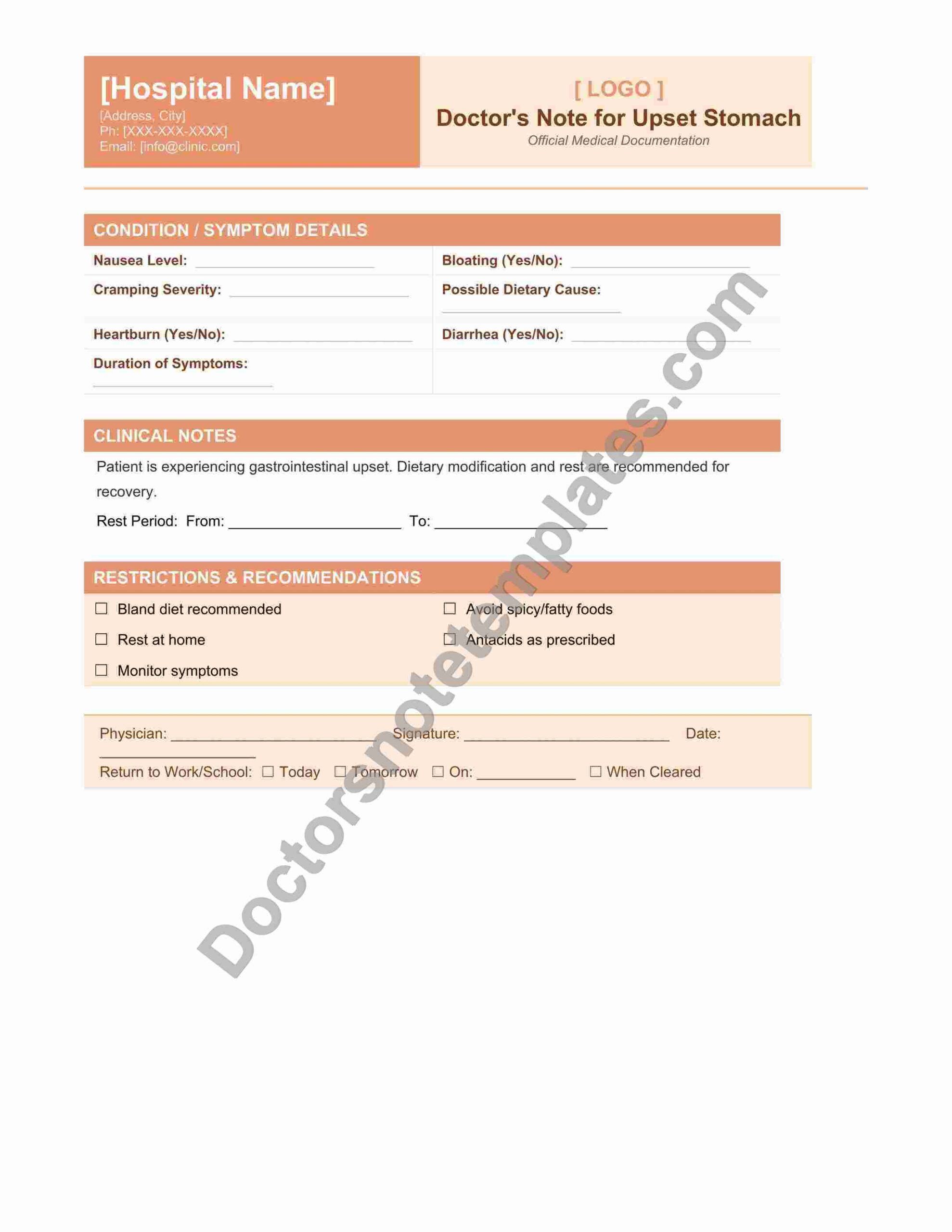
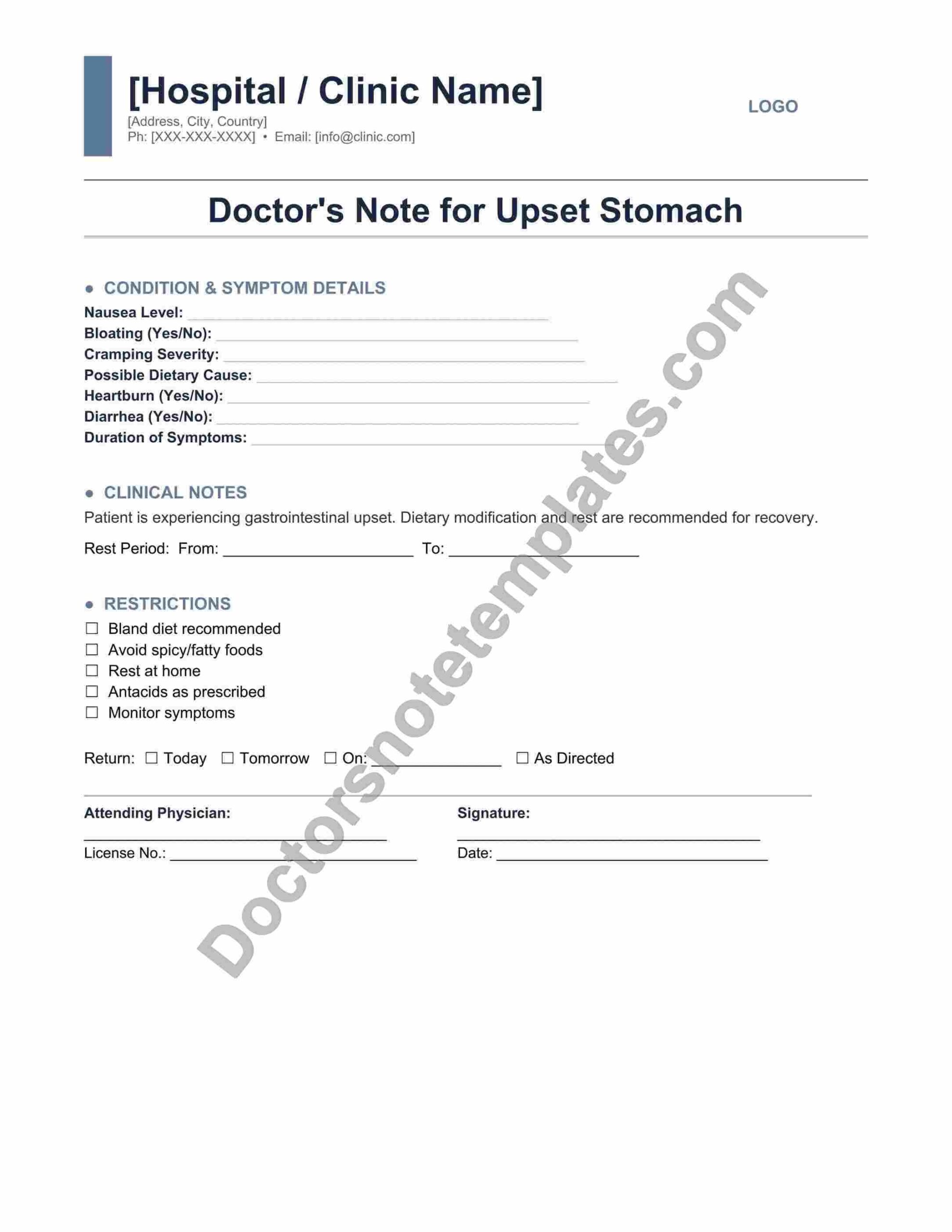
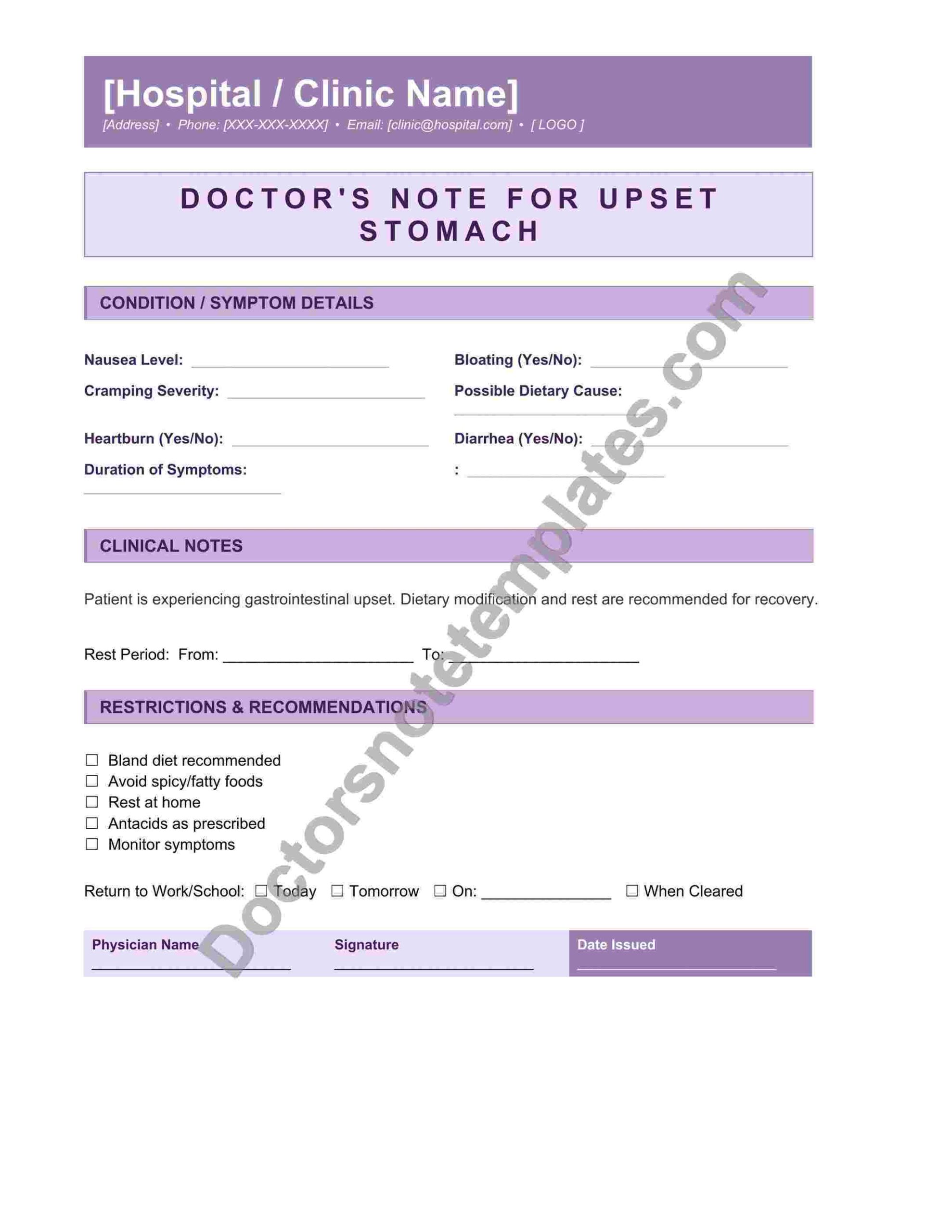
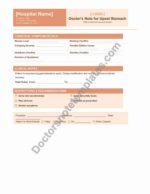
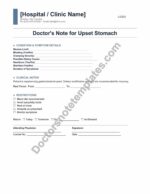
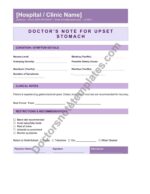
A Doctor’s Note for Upset Stomach is a medical document provided by a licensed healthcare professional after assessing your symptoms and determining whether medical leave, rest, or temporary restrictions are appropriate. The note can be used to support an absence from work, school, or other commitments while you recover.
Many stomach-related illnesses improve within a few days with rest, hydration, and appropriate care. However, some cases may require medical evaluation to rule out more serious conditions or to provide documentation for employers or educational institutions.
If visiting a clinic is difficult because of your symptoms, many healthcare providers also offer secure online consultations. Following a proper medical assessment, eligible patients may receive a doctor’s note electronically when medically appropriate.
Online Printable Doctor’s Note for Upset Stomach
Symptoms of upset stomach
| • Nausea | • cramps |
| • bloating | • diarrhea |
| • fatigue | • discomfort |
| • indigestion | • gas |
| • weakness | • loss of appetite |
Abstinence of upset stomach
| • Avoid spicy food | • avoid oily food |
| • avoid dairy | • avoid alcohol |
| • avoid caffeine | • avoid heavy meals |
| • avoid junk food | • avoid dehydration |
| • avoid poor hygiene | • avoid contaminated food |
Doctor’s Note for an Upset Stomach?
A Doctor’s Note for Upset Stomach is an official medical certificate confirming that a healthcare provider has evaluated your condition and determined that your symptoms may temporarily affect your ability to work, study, or perform regular activities.
Depending on the assessment, the note may recommend:
- Time away from work
- Excused absence from school or college
- Temporary work restrictions
- Rest and recovery at home
- Follow-up medical care if symptoms continue
The purpose of the note is to verify that your absence or limitations are medically supported. It generally contains only the information necessary for your employer or educational institution and does not usually include detailed personal medical information.
An upset stomach is a general term used to describe discomfort affecting the stomach or digestive system. It is a symptom rather than a specific medical condition and can have many possible causes, ranging from mild indigestion to viral infections.
Some people experience only mild discomfort, while others may develop symptoms severe enough to interfere with their daily routine.
An upset stomach may occur after eating certain foods, during a viral illness, because of stress, or as a result of an underlying digestive condition. In most cases, symptoms improve with appropriate care, but persistent or severe symptoms should be evaluated by a healthcare professional.
Common Symptoms of an Upset Stomach
Symptoms vary depending on the underlying cause and may appear suddenly or gradually.
Common symptoms include:
- Nausea
- Vomiting
- Diarrhoea
- Stomach pain
- Abdominal cramps
- Bloating
- Indigestion
- Loss of appetite
- Excessive gas
- Acid reflux or heartburn
- Feeling overly full after eating
- Mild fever (in some infections)
- Fatigue caused by dehydration or illness
Some individuals experience only one or two symptoms, while others may have several symptoms at the same time.
If symptoms are severe, continue for several days, or worsen instead of improving, medical assessment is recommended.
Common Causes of an Upset Stomach
There are many reasons why someone may develop stomach discomfort. Identifying the cause helps healthcare providers recommend appropriate treatment and determine whether medical leave is necessary.
Viral Gastroenteritis (Stomach Flu)
Viral gastroenteritis is one of the most common causes of an upset stomach. It can lead to:
- Diarrhoea
- Vomiting
- Stomach cramps
- Nausea
- Mild fever
- Fatigue
Most people recover within a few days, although adequate hydration is important.
Food Poisoning
Food poisoning may occur after consuming contaminated food or drinks.
Common symptoms include:
- Sudden nausea
- Vomiting
- Diarrhoea
- Severe stomach cramps
- Fever in some cases
Symptoms may begin within hours of eating contaminated food and can vary in severity.
Indigestion (Dyspepsia)
Indigestion commonly develops after eating large meals, spicy foods, fatty foods, or eating too quickly.
Symptoms may include:
- Upper abdominal discomfort
- Bloating
- Heartburn
- Feeling overly full
- Burping
- Mild nausea
Indigestion is often temporary but may recur in some individuals.
Gastritis
Gastritis occurs when the stomach lining becomes irritated or inflamed.
Possible symptoms include:
- Burning stomach pain
- Nausea
- Vomiting
- Bloating
- Loss of appetite
A healthcare provider may recommend further evaluation if symptoms continue.
Stress and Anxiety
Emotional stress can affect the digestive system.
Some people experience:
- Stomach discomfort
- Nausea
- Diarrhoea
- Loss of appetite
- Abdominal cramping
Managing stress and addressing underlying mental health concerns may help reduce digestive symptoms.
Food Intolerances
Certain foods may trigger digestive symptoms in sensitive individuals.
Common examples include intolerance to:
- Dairy products
- Gluten
- Artificial sweeteners
- Highly processed foods
- Certain spicy foods
Avoiding trigger foods may help reduce future episodes.
When Might You Need a Doctor’s Note for an Upset Stomach?
Not every upset stomach requires medical documentation. However, a Doctor’s Note for Upset Stomach may be appropriate when your symptoms prevent you from safely carrying out your normal responsibilities.
You may benefit from a doctor’s note if:
- You are unable to attend work because of vomiting or diarrhoea.
- Your employer requires medical documentation for sick leave.
- Your school or university requests proof of illness.
- Your symptoms last longer than expected.
- You work in healthcare, childcare, hospitality, or food service, where returning too soon could increase the risk of spreading an infection.
- A healthcare provider recommends rest before returning to normal activities.
A doctor’s note helps confirm that your absence is based on a professional medical assessment rather than self-reporting alone.
Can an Upset Stomach Be Serious?
Most cases of an upset stomach are mild and improve within a few days. However, some symptoms may indicate a more serious condition that requires prompt medical evaluation.
You should seek medical attention if you experience:
- Severe or worsening abdominal pain
- Persistent vomiting that prevents you from keeping fluids down
- Signs of dehydration, such as dizziness, dry mouth, or reduced urination
- Blood in your vomit or stool
- A high fever that does not improve
- Symptoms lasting longer than several days without improvement
- Severe weakness or confusion
A healthcare professional can assess your symptoms, identify the underlying cause, and recommend appropriate treatment or further testing if needed.
Can You Get a Doctor’s Note for an Upset Stomach Online?
Yes, many healthcare providers now offer virtual consultations for common, short-term illnesses, including stomach-related conditions. If your symptoms make it difficult to visit a clinic, an online appointment allows you to speak with a licensed healthcare professional from home.
During the consultation, the healthcare provider will assess your symptoms, ask about your medical history, and determine whether a Doctor’s Note for Upset Stomach or other medical documentation is appropriate.
If medically justified, your doctor’s note may be provided electronically after the consultation.
Online consultations can be a convenient option for people experiencing:
- Nausea
- Vomiting
- Diarrhoea
- Stomach cramps
- Abdominal pain
- Mild digestive illnesses
- Food poisoning symptoms
- Viral gastroenteritis (stomach flu)
However, severe symptoms may require an in-person medical examination or emergency care.
How to Get a Doctor’s Note for an Upset Stomach
Obtaining a doctor’s note is a straightforward process when you receive care from a qualified healthcare provider.
Step 1: Schedule an Appointment
Book either an online or in-person consultation at a convenient time.
You may be asked to provide basic information such as:
- Your name
- Contact details
- Current symptoms
- Preferred appointment time
Step 2: Discuss Your Symptoms
During your appointment, the healthcare provider will ask questions to better understand your condition.
Common questions may include:
- When did your symptoms begin?
- Are you experiencing nausea or vomiting?
- How often are you having diarrhoea?
- Do you have stomach pain or cramping?
- Have you recently eaten anything unusual?
- Have you travelled recently?
- Are you able to drink fluids?
- Do you have a fever?
- Have your symptoms improved or worsened?
Answering these questions accurately helps the provider determine the most appropriate care.
Step 3: Medical Assessment
The healthcare provider will evaluate:
- Your symptoms
- Overall health
- Medical history
- Possible causes
- Risk factors
- Whether additional medical evaluation is needed
The assessment also helps determine whether you require:
- Rest at home
- Medication recommendations
- Further testing
- Follow-up care
- A doctor’s note for work or school
Step 4: Receive Your Doctor’s Note
If the healthcare provider determines that medical documentation is appropriate, you may receive your doctor’s note electronically or in another approved format.
The document can generally be used to support:
- Sick leave from work
- School or college absences
- University attendance requirements
- Employer documentation requests
- Short-term medical leave
What Information Is Included in a Doctor’s Note for an Upset Stomach?
A legitimate doctor’s note includes only the information necessary to confirm that you have been medically assessed.
It may include:
- Patient’s name
- Date of consultation
- Date the note was issued
- Healthcare provider’s name and professional credentials
- Confirmation that a medical assessment was completed
- Recommended period of leave or rest
- Expected return date, if appropriate
- Healthcare provider’s signature or electronic authentication
The note is designed to support your absence while protecting your personal medical information.
Will My Doctor’s Note Mention My Diagnosis?
Not always.
In many cases, the note simply states that you were medically assessed and are temporarily unable to work or attend school.
Whether the specific diagnosis is included depends on:
- Local healthcare regulations
- Employer or school requirements
- Healthcare provider’s judgement
- Your consent, where applicable
Many employers only require confirmation that a healthcare professional recommends medical leave rather than detailed information about your condition.
Doctor’s Note for Upset Stomach for Work
Digestive illnesses can make it difficult to work safely and comfortably, particularly when symptoms include vomiting, diarrhoea, abdominal pain, or dehydration.
A Doctor’s Note for Upset Stomach for Work may help employees:
- Verify a medically necessary absence
- Request short-term sick leave
- Support a return-to-work plan
- Explain temporary work restrictions
- Meet employer documentation requirements
For individuals working in food preparation, healthcare, childcare, hospitality, or similar settings, staying home while experiencing symptoms may also help reduce the spread of infectious illnesses.
Healthcare providers will recommend when it is medically appropriate to return to work based on your symptoms and recovery.
Doctor’s Note for Upset Stomach for School or University
Students may also require medical documentation if digestive symptoms prevent them from attending classes or completing academic responsibilities.
A doctor’s note may support requests for:
- Excused absences
- Assignment extensions
- Rescheduled examinations
- Temporary academic accommodations
- Return-to-class documentation
Educational institutions often have their own attendance and documentation policies, so students should check the specific requirements of their school, college, or university.
Who Can Issue a Doctor’s Note for an Upset Stomach?
A valid doctor’s note should be issued by a qualified healthcare professional authorised to provide medical documentation.
Depending on local regulations, this may include:
- General practitioners (GPs)
- Family physicians
- Licensed medical doctors
- Nurse practitioners (where authorised)
- Other qualified healthcare professionals permitted to issue medical certificates
The healthcare provider must conduct an appropriate medical assessment before issuing documentation.
Is an Online Doctor’s Note Valid?
In many regions, an online doctor’s note is accepted when it has been issued by a licensed healthcare provider following a proper medical consultation.
Acceptance depends on several factors, including:
- Employer or educational institution policies
- Local healthcare regulations
- Whether the consultation met professional standards
- The authenticity of the medical document
If you are unsure whether an electronic doctor’s note will be accepted, check with your employer or educational institution before submitting it.
How Long Can a Doctor’s Note Cover?
The length of a doctor’s note depends on your symptoms and the healthcare provider’s clinical assessment.
For many mild stomach illnesses, a short period of rest may be sufficient. If symptoms persist or recovery takes longer than expected, the healthcare provider may recommend a follow-up assessment before extending medical leave.
Every case is unique, and the duration of leave should always be based on your individual medical condition rather than a standard timeframe.
Recovery From an Upset Stomach
The recovery time for an upset stomach depends on the underlying cause, the severity of symptoms, and the individual’s overall health. Many mild digestive issues improve within a few days with proper rest, hydration, and supportive care.
During recovery, it is important to listen to your body and avoid returning to normal activities too quickly if symptoms are still affecting your ability to function.
Factors that may influence recovery include:
- Cause of the stomach problem
- Severity of symptoms
- Ability to stay hydrated
- Response to treatment
- Presence of other health conditions
A healthcare provider can guide you on when it is appropriate to return to work, school, or other regular activities.
Treatment Options for an Upset Stomach
Treatment for an upset stomach depends on what is causing the symptoms. A healthcare provider may recommend different approaches based on your individual situation.
Staying Hydrated
Vomiting and diarrhoea can cause fluid loss, which may lead to dehydration.
Helpful steps may include:
- Drinking water regularly
- Taking small sips of fluids if you feel nauseous
- Using oral rehydration solutions when recommended
- Avoiding excessive caffeine or alcohol during recovery
Maintaining proper hydration is one of the most important parts of recovering from many stomach illnesses.
Eating Gentle Foods
When your stomach is recovering, eating lighter foods may be easier to tolerate.
Some people find it helpful to choose:
- Plain rice
- Bananas
- Toast
- Crackers
- Soup
- Easily digestible meals
It may be helpful to avoid heavy, greasy, spicy, or highly processed foods until symptoms improve.
Rest and Recovery
Rest allows your body to focus on healing.
During recovery, consider:
- Getting adequate sleep
- Avoiding strenuous activities
- Taking breaks when needed
- Gradually returning to normal routines
If symptoms make it difficult to work or attend school, a Doctor’s Note for Upset Stomach can help provide appropriate medical documentation for your absence.
Medication and Medical Support
Depending on the cause of your symptoms, a healthcare provider may recommend medications or other treatments.
Treatment recommendations may vary depending on whether the symptoms are related to:
- Viral gastroenteritis
- Food poisoning
- Acid reflux
- Gastritis
- Food intolerance
- Other digestive conditions
It is important to follow professional medical guidance and avoid taking medications without understanding whether they are suitable for your condition.
Preventing Future Upset Stomach Problems
While not every stomach illness can be prevented, certain habits may reduce the risk of digestive problems.
Practice Good Food Hygiene
To reduce the risk of food-related illnesses:
- Wash hands before preparing or eating food
- Store food at appropriate temperatures
- Cook food thoroughly
- Avoid consuming expired foods
- Keep kitchen surfaces clean
Maintain Healthy Eating Habits
Helpful habits may include:
- Eating balanced meals
- Avoiding foods that trigger symptoms
- Eating slowly
- Staying hydrated
- Limiting excessive spicy or fatty foods if they cause discomfort
Reduce Stress When Possible
Stress can affect digestion and may contribute to stomach discomfort in some people.
Stress management strategies may include:
- Regular physical activity
- Relaxation techniques
- Adequate sleep
- Taking regular breaks
- Maintaining a healthy routine
If stress regularly causes digestive symptoms, discussing this with a healthcare provider may be helpful.
Returning to Work or School After an Upset Stomach
Knowing when to return to normal activities depends on your symptoms and the cause of your illness.
You may be ready to return when:
- Vomiting has stopped
- Diarrhoea has improved
- You can maintain normal hydration
- You feel physically capable of completing your responsibilities
- A healthcare provider has confirmed that returning is appropriate when needed
For some contagious stomach illnesses, healthcare providers may recommend waiting before returning to work or school to reduce the chance of spreading infection.
Privacy and Confidentiality of a Doctor’s Note for Upset Stomach
Many people worry about sharing health information with employers or schools. Medical confidentiality is an important part of healthcare documentation.
A Doctor’s Note for Upset Stomach generally includes only necessary information, such as:
- Confirmation of medical assessment
- Recommended time away from work or school
- Recovery guidance if required
- Healthcare provider verification
It usually does not include:
- Detailed medical history
- Personal health information unrelated to the absence
- Private discussions with your healthcare provider
Your healthcare information should be handled according to applicable privacy regulations and professional healthcare standards.
What If Your Employer Requires a Doctor’s Note?
Many workplaces have policies regarding medical documentation for absences.
If your employer requires a doctor’s note, you should:
- Understand your workplace sick leave policy
- Provide documentation from a qualified healthcare provider
- Submit the note within the required timeframe
- Keep a copy of your medical documentation
A doctor’s note helps confirm that your absence was medically necessary and supports communication between you and your employer.
When Should You See a Doctor for an Upset Stomach?
While many cases improve naturally, some situations require professional medical attention.
You should consider contacting a healthcare provider if you experience:
- Symptoms that continue for several days
- Severe abdominal pain
- Repeated vomiting
- Signs of dehydration
- Blood in vomit or stool
- High fever
- Unexplained weight loss
- Symptoms that frequently return
- Difficulty eating or drinking normally
A healthcare provider can evaluate your symptoms and determine whether additional testing or treatment is needed.
Why Medical Assessment Matters
An upset stomach can have many different causes, and symptoms that seem minor may occasionally require further evaluation.
A healthcare provider can help:
- Identify possible causes
- Recommend appropriate care
- Determine whether medical leave is needed
- Provide documentation when appropriate
- Guide you on returning to normal activities
A Doctor’s Note for Upset Stomach should always be based on a genuine medical consultation and professional assessment.
Frequently Asked Questions About Doctor’s Note for Upset Stomach
1. Can I Get a Doctor’s Note for an Upset Stomach?
Yes, you may be able to get a Doctor’s Note for Upset Stomach after a healthcare provider evaluates your symptoms and determines that medical documentation is appropriate.
An upset stomach can sometimes make it difficult to work, attend school, or complete daily responsibilities. A healthcare provider can assess your condition and provide documentation if your symptoms justify time away or temporary restrictions.
The note confirms that you received medical evaluation and may recommend appropriate rest or leave based on your individual situation.
2. Can I Get an Online Doctor’s Note for an Upset Stomach?
Yes, many healthcare providers offer online consultations for common digestive issues, including upset stomach symptoms.
During an online appointment, a healthcare provider may ask about:
- Your symptoms
- How long you have been feeling unwell
- Severity of nausea, vomiting, or diarrhoea
- Recent food intake
- Medical history
- Ability to complete normal activities
If the provider determines that documentation is medically appropriate, an online doctor’s note may be issued electronically.
3. How Long Should I Stay Home With an Upset Stomach?
The recommended recovery period depends on the cause and severity of your symptoms.
Some mild stomach problems improve within a short time, while others may require longer rest.
Factors that affect recovery include:
- Type of illness
- Severity of symptoms
- Hydration level
- Response to treatment
- Overall health condition
A healthcare provider can advise when returning to work or school is appropriate.
4. Can I Get a Sick Note for Diarrhoea and Vomiting?
Yes, diarrhoea and vomiting are common reasons people may need medical documentation.
These symptoms can make it difficult to work or attend school, especially if they are severe or caused by an infectious illness.
A healthcare provider can assess:
- Symptom severity
- Risk of dehydration
- Possible causes
- Whether rest or medical leave is recommended
5. Can Food Poisoning Qualify for a Doctor’s Note?
Yes, food poisoning may require a doctor’s note if symptoms affect your ability to perform normal activities.
Food poisoning symptoms may include:
- Nausea
- Vomiting
- Diarrhoea
- Stomach cramps
- Fever
- Weakness
A healthcare provider can evaluate your condition and determine whether medical documentation is appropriate.
6. Will My Employer Know I Have an Upset Stomach?
Not necessarily.
A doctor’s note usually provides only the information needed to verify your medical absence. It may confirm that you were assessed by a healthcare professional and require time away from work.
The specific diagnosis included on a medical note depends on:
- Local regulations
- Employer requirements
- Healthcare provider recommendations
- Privacy considerations
Medical information is generally handled confidentially.
7. Does a Doctor’s Note for Upset Stomach Need to Include the Diagnosis?
Not always.
Many medical certificates focus on confirming that a healthcare provider has assessed your condition and that you require medical leave or support.
Whether the diagnosis is included depends on:
- Workplace or school requirements
- Healthcare documentation rules
- Patient privacy considerations
You can discuss your preferences and requirements with your healthcare provider.
8. Can I Use an Upset Stomach Doctor’s Note for School?
Yes, students may use a doctor’s note for an upset stomach to support medically necessary absences.
It may help with:
- Excused absences
- Assignment extensions
- Exam rescheduling
- Academic accommodations
Schools and universities may have specific requirements, so students should check their institution’s attendance policies.
9. Is an Online Doctor’s Note for Upset Stomach Valid?
An online doctor’s note may be valid if it is issued by a qualified healthcare provider after a proper medical consultation.
Acceptance depends on:
- Healthcare provider credentials
- Local regulations
- Employer or institution policies
- Documentation requirements
A genuine medical assessment is an important part of valid medical documentation.
10. What Symptoms May Require Medical Attention for an Upset Stomach?
You should consider seeking medical advice if you experience:
- Severe stomach pain
- Persistent vomiting
- Signs of dehydration
- Blood in stool or vomit
- High fever
- Symptoms lasting several days
- Difficulty keeping fluids down
- Severe weakness
A healthcare provider can determine whether additional treatment or testing is needed.
11. Can Stress Cause an Upset Stomach?
Yes, stress can affect the digestive system and may contribute to symptoms such as:
- Nausea
- Stomach discomfort
- Changes in bowel habits
- Loss of appetite
- Abdominal cramps
If stress-related stomach symptoms occur frequently, discussing them with a healthcare provider may help identify appropriate support.
12. Can I Get a Doctor’s Note for Stomach Pain?
Yes, stomach pain may be a reason to seek medical assessment and documentation if it affects your ability to work, study, or complete daily activities.
The healthcare provider will consider:
- Location and severity of pain
- Duration of symptoms
- Other symptoms present
- Possible causes
A doctor’s note may be provided if medically appropriate.
13. How Much Time Off Can I Get for an Upset Stomach?
The amount of time recommended depends on your individual condition.
A healthcare provider may consider:
- Severity of symptoms
- Type of illness
- Recovery progress
- Risk of spreading infection
- Ability to return safely to normal activities
There is no fixed duration because every person’s situation is different.
14. Can I Work With an Upset Stomach?
It depends on the severity and cause of your symptoms.
You may need to stay home if you have:
- Vomiting
- Frequent diarrhoea
- Fever
- Severe abdominal pain
- A contagious stomach infection
Returning to work too early may slow recovery or increase the risk of spreading illness to others, especially in certain workplaces.
15. How Can I Get a Doctor’s Note for an Upset Stomach Quickly?
The quickest option may be scheduling an appointment with a healthcare provider who offers timely consultations.
During the consultation, the provider will review your symptoms and determine whether a doctor’s note is medically appropriate.
If approved, documentation may be provided electronically, making it easier to submit to your workplace or educational institution.
Key Takeaways About Doctor’s Note for Upset Stomach
- An upset stomach can temporarily affect your ability to work, study, and complete daily activities.
- A Doctor’s Note for Upset Stomach provides medical documentation after professional assessment.
- Online consultations can offer convenient access to healthcare support.
- Medical notes help support sick leave requests while protecting personal privacy.
- Persistent or severe symptoms should be evaluated by a healthcare professional.
Final Thoughts: Getting a Doctor’s Note for Upset Stomach
An upset stomach can be uncomfortable and disruptive, especially when symptoms such as nausea, vomiting, diarrhoea, stomach cramps, or abdominal pain make it difficult to complete normal daily responsibilities.
A Doctor’s Note for Upset Stomach provides medical documentation from a qualified healthcare professional confirming that your condition has been assessed and that you may require time away from work, school, or other commitments while recovering.
Whether your symptoms are caused by food poisoning, viral gastroenteritis, indigestion, stress, or another digestive issue, getting proper medical guidance can help you understand your condition and determine the right steps for recovery.
A doctor’s note is not only useful for explaining an absence. It also provides reassurance that your health concerns have been professionally evaluated while helping employers, schools, and other organisations understand your need for temporary support.
Why Choose an Online Doctor’s Note for Upset Stomach?
When dealing with stomach-related symptoms, travelling to a clinic may not always be convenient. Nausea, vomiting, diarrhoea, and abdominal discomfort can make leaving home challenging.
Online healthcare consultations provide a convenient way to connect with a healthcare professional without unnecessary travel.
Benefits of an online consultation may include:
Convenient Healthcare Access
You can speak with a healthcare provider from the comfort of your home, which can be especially helpful when you are experiencing discomfort or weakness.
Saves Time
Online appointments reduce travel time and waiting periods, allowing you to focus on rest and recovery.
Private Medical Consultation
Discussing health concerns privately with a qualified healthcare professional allows you to receive personalised guidance in a comfortable environment.
Flexible Appointment Options
Online healthcare services often provide appointment options that fit different schedules, making it easier to access medical support when needed.
Digital Medical Documentation
If a healthcare provider determines that a doctor’s note is appropriate after assessment, documentation may be provided electronically for convenient use.
How Our Online Doctor’s Note Process Works
Getting medical documentation for an upset stomach can be simple and straightforward.
Step 1: Book Your Consultation
Schedule an online appointment and provide basic details about your symptoms and healthcare needs.
Step 2: Discuss Your Symptoms
Speak with a licensed healthcare provider about:
- Your current symptoms
- When your symptoms started
- How your condition affects daily activities
- Any relevant medical history
Step 3: Complete a Medical Assessment
The healthcare provider reviews your condition and determines whether a doctor’s note or additional medical guidance is appropriate.
Step 4: Receive Your Documentation
If approved, you may receive your doctor’s note electronically, which can be used according to your workplace, school, or organisation’s requirements.
Who May Need a Doctor’s Note for Upset Stomach?
A medical note may be useful for:
Employees
Workers may need documentation when stomach symptoms prevent them from attending work or performing their duties effectively.
A doctor’s note may support:
- Sick leave requests
- Short-term absence
- Return-to-work guidance
- Workplace documentation requirements
Students
Students may need a doctor’s note to explain missed classes, exams, or assignments due to illness.
It may support:
- Approved absences
- Academic extensions
- Exam rescheduling
- Temporary study adjustments
Individuals Recovering From Illness
Anyone experiencing digestive symptoms that interfere with daily responsibilities may benefit from professional medical assessment and appropriate documentation.
Important Reminder About Upset Stomach Symptoms
While many upset stomach cases improve with rest, hydration, and supportive care, some symptoms may require medical attention.
Seek professional medical advice if you experience:
- Severe or persistent abdominal pain
- Signs of dehydration
- Blood in vomit or stool
- High fever
- Ongoing vomiting
- Symptoms that continue without improvement
A healthcare provider can help determine whether further evaluation or treatment is needed.
Get a Doctor’s Note for Upset Stomach Online
Managing an upset stomach while handling work, school, and personal responsibilities can be challenging. Access to convenient healthcare support can make the process easier.
At RealDoctorsNotes.com, eligible patients can connect with healthcare professionals through online consultations to discuss their symptoms and documentation requirements.
A healthcare provider can assess your condition and determine whether a Doctor’s Note for Upset Stomach is medically appropriate.
Get the support and documentation you need while focusing on your recovery.
Reviews
There are no reviews yet.